


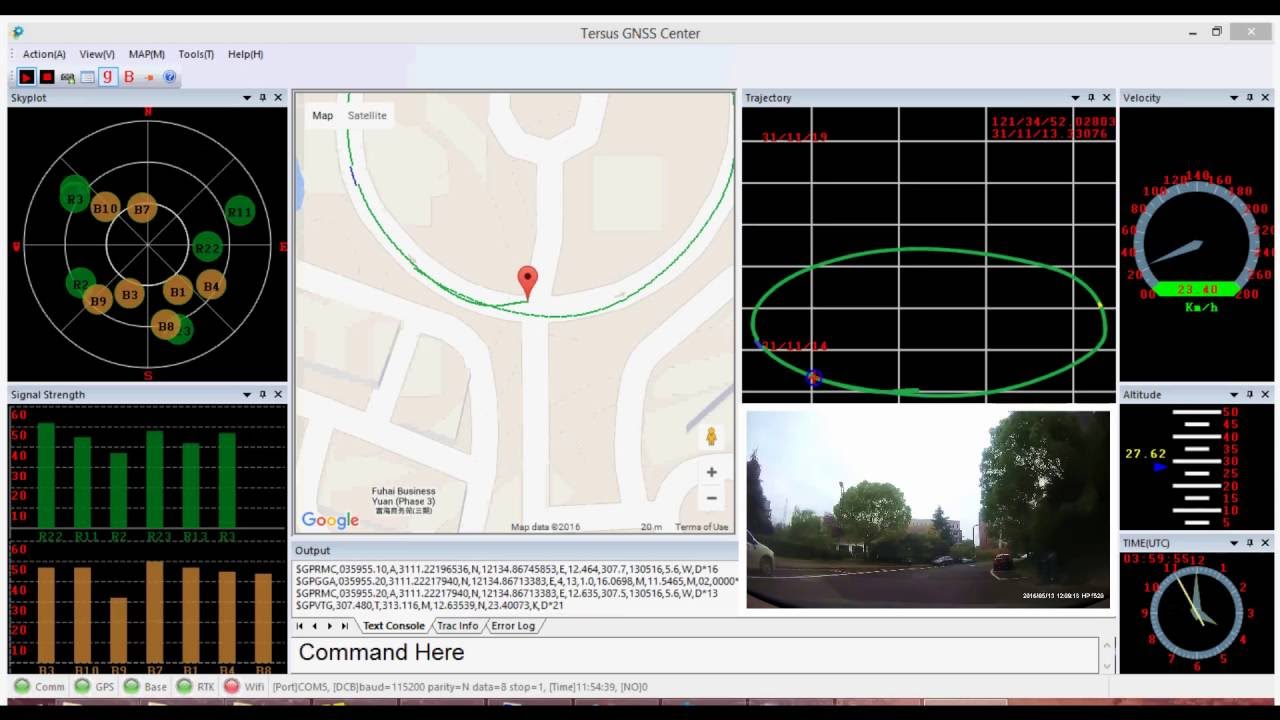
Drones have revolutionized industries ranging from agriculture to filmmaking, but achieving pinpoint accuracy in flight and data collection requires more than just advanced sensors—it demands precision gps for drones. This technology ensures that drones can navigate complex environments, execute tasks with minimal error, and capture reliable data for analysis.
What is Precision GPS for Drones?
Traditional GPS systems provide a general location with an accuracy of a few meters. While sufficient for casual drone use, commercial and industrial applications require far greater precision. Precision GPS for drones utilizes advanced correction techniques, including Real-Time Kinematic (RTK) and Differential GPS (DGPS), to reduce positional errors to just a few centimeters. This enables drones to maintain stable flight paths, even in challenging conditions like urban landscapes or dense forests.
Benefits of Precision GPS in Drone Operations
- Enhanced Flight Accuracy
With precise positioning, drones can follow predefined routes with minimal deviation. This is particularly important for surveying, mapping, and agricultural monitoring, where even minor errors can lead to inaccurate results. - Improved Data Quality
For tasks such as 3D mapping or crop health analysis, high positional accuracy ensures that the collected data aligns perfectly with real-world coordinates. This leads to better decision-making and resource management. - Safety and Reliability
Precision GPS allows drones to detect and avoid obstacles more effectively. Coupled with autonomous flight systems, it reduces the risk of crashes and ensures mission success even in complex environments.
Applications of Precision GPS for Drones
- Agriculture: Accurate field mapping and crop monitoring
- Construction: Precise site surveys and progress tracking
- Film and Media: Stable aerial shots for cinematography
- Environmental Monitoring: Detailed wildlife tracking and landscape analysis
Conclusion
Incorporating precision GPS for drones is no longer optional for professionals—it’s essential. From improving flight accuracy to enhancing data reliability, this technology empowers drones to perform complex tasks with confidence. As drone applications continue to expand, investing in precision GPS ensures that aerial operations are safer, more efficient, and more accurate than ever.
