


The field of geolocation technology is rapidly evolving, and Future Trends in rtk gps and High-Precision Positioning are shaping industries from agriculture to autonomous vehicles. RTK (Real-Time Kinematic) GPS provides centimeter-level accuracy, far beyond standard GPS systems, making it essential for applications where precision is critical.
Advancements in RTK GPS Technology
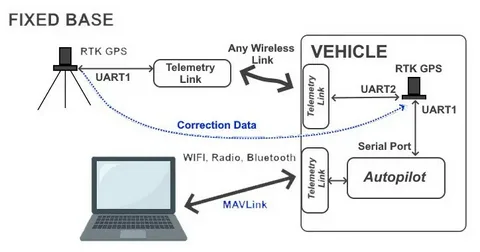
RTK GPS systems rely on correction signals from base stations to enhance positioning accuracy. One of the key future trends in RTK GPS and high-precision positioning is the integration of multi-constellation GNSS (Global Navigation Satellite Systems), including GPS, GLONASS, Galileo, and BeiDou. By accessing multiple satellite systems, devices can maintain stronger signals in challenging environments such as urban canyons or dense forests.
Additionally, improvements in RTK algorithms are enabling faster convergence times and reduced signal latency, allowing for real-time applications in construction, surveying, and robotics.
Integration with IoT and Autonomous Systems
High-precision positioning is increasingly being integrated with IoT devices and autonomous systems. Drones, self-driving cars, and smart farming equipment rely heavily on RTK GPS and high-precision positioning to navigate accurately and operate safely. Future trends indicate that these technologies will become more compact, energy-efficient, and affordable, expanding their accessibility across various sectors.
Cloud-Based and Network RTK Services
Another significant trend in RTK GPS technology is the shift toward cloud-based and network RTK services. Instead of relying solely on local base stations, users can access corrections via cellular or internet networks, offering seamless high-precision positioning across larger areas. This trend is set to revolutionize industries that require wide-area coverage, such as logistics, maritime navigation, and environmental monitoring.
Challenges and Opportunities
Despite the exciting advancements, challenges remain. Signal interference, atmospheric conditions, and the need for robust cybersecurity are critical concerns for future trends in RTK GPS and high-precision positioning. However, ongoing research and development are addressing these issues, ensuring that the next generation of RTK GPS technology will be more reliable and versatile than ever.
Conclusion
The future trends in RTK GPS and high-precision positioning point toward a world where centimeter-level accuracy is standard and widely accessible. With advancements in multi-constellation GNSS, integration with IoT and autonomous systems, and cloud-based network RTK services, industries across the globe are poised to benefit from unprecedented precision in navigation and positioning.
