


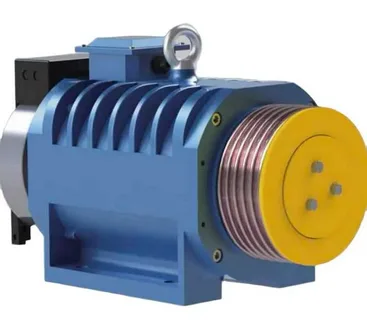
One of the most critical components of elevators, which are widely used in living spaces, workplaces, and various commercial establishments, is the elevator motor. The elevator motor is a fundamental element that ensures the elevator operates efficiently, safely, and smoothly. This motor provides the power source that enables elevator cabins to move up and down. The elevator motor plays a significant role in the healthy and safe operation of elevator systems.
What is the Primary Function of an Elevator Motor?
The most important function of the elevator motor is to move the elevator car to the desired height or floor. This motor converts electrical energy into mechanical energy, enabling the elevator to move. Additionally, the motor used produces high torque by reducing the speed via a reducer, thereby moving the elevator car. Elevator motors are divided into two main groups: alternating current (AC) and direct current (DC) motors. The motor moves the elevator car up or down using a rope and pulley system. Today, DC motors are more commonly preferred in modern elevators because they provide precise speed control.
Types of Elevator Motors
Elevator motors can have different characteristics depending on the type of elevator and its intended use. The most commonly used motor types are as follows:
DC Motor: These motors are ideal for applications where speed control precision is important. They are frequently used in today’s modern elevators because speed settings can be easily adjusted and they can produce high torque.
PMSM (Permanent Magnet Synchronous Motor): Preferred in modern elevator systems, this motor stands out for its quiet operation and high energy efficiency.
Synchronous Motor: Rotates at a constant speed and provides continuous speed. In elevators, it meets the requirement for smooth and uninterrupted movement.
Asynchronous Motor: Offering flexible speed control, this motor is generally preferred by users seeking cost-effective solutions.
Technical Specifications of Elevator Motors
The power of an elevator motor is crucial in determining its load capacity. The starting and stopping of the elevator’s movement is controlled by torque. High-torque motors are required to transport heavy loads. In addition, the high efficiency of the motors ensures more energy-efficient elevator use. For cabins to stop safely at the desired floors, there must be a brake system inside or outside the motor. This feature increases elevator safety and ensures the system works properly.
Elevator Motor Selection
Elevator motor selection should be based on installation conditions and usage requirements. The power of the selected motor must be appropriate for the load capacity. Users who require high load capacity should opt for powerful motor options. Elevators vary according to different usage areas such as passengers, patients, or cargo. The appropriate motor type should be selected based on the specific need. Silent motors offer ideal solutions, especially in areas where noise is undesirable. This ensures an efficient elevator experience with low noise levels.
Elevator Motor Maintenance
Regular maintenance is required for the elevator motor to operate smoothly for a long time. During maintenance, procedures such as oil changes, wear detection, and cleaning should be performed by professional technicians. It is important to check the condition of the motor’s electrical connections and examine the brake system for any problems. In addition, in modern elevator systems, software updates and sensor checks should also be performed for motor maintenance. Proper functioning of these sensors ensures that the elevator performs its duties safely.
