


Introduction
Modern construction and agriculture are rapidly evolving with the help of advanced positioning systems. One of the most impactful innovations is machine control gnss Technology: A Complete Beginner’s Guide, which explains how satellite-based navigation is used to guide heavy machinery with extreme accuracy. From earthmoving to grading and excavation, this technology is reshaping how industries achieve precision and efficiency.
In this article, we’ll break down how it works, why it matters, and how beginners can understand its core concepts.
What is Machine Control GNSS Technology?
Machine Control GNSS Technology: A Complete Beginner’s Guide starts with understanding GNSS itself. GNSS (Global Navigation Satellite System) refers to satellite networks that provide positioning data anywhere on Earth.
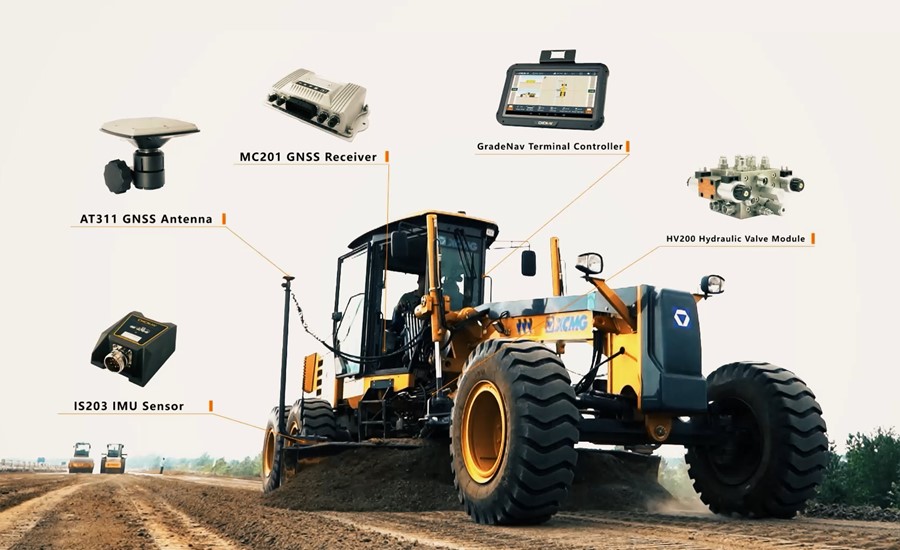
Machine control systems combine GNSS signals with onboard sensors and software to automatically guide construction equipment such as:
- Bulldozers
- Excavators
- Motor graders
- Pavers
This allows machines to follow digital design plans with centimeter-level accuracy, reducing the need for manual surveying.
How Machine Control GNSS Works
To fully understand Machine Control GNSS Technology: A Complete Beginner’s Guide, it’s important to know the workflow behind it:
1. Satellite Positioning
GNSS satellites transmit signals to a receiver installed on the machine. This receiver calculates the machine’s exact position in real time.
2. Digital Terrain Models (DTM)
Engineers create a 3D model of the construction site. This model acts as a reference for elevation, slope, and boundaries.
3. Onboard Control System
The machine’s computer compares real-world position with the digital design and automatically adjusts blade height, bucket angle, or steering direction.
4. Real-Time Corrections
Correction systems (like RTK) improve accuracy to within a few centimeters.
Key Benefits of Machine Control GNSS
Understanding Machine Control GNSS Technology: A Complete Beginner’s Guide also means recognizing its advantages:
Improved Accuracy
Operators can achieve precise grading and excavation without repeated manual checks.
Increased Productivity
Machines work faster since fewer passes are needed to complete tasks.
Reduced Material Waste
Accurate cuts and fills minimize overuse of materials like soil, gravel, or asphalt.
Lower Labor Costs
Fewer surveyors and manual operators are required on-site.
Applications in Real-World Industries
The use of machine control GNSS is expanding across multiple sectors:
Construction
Used for road building, site leveling, and infrastructure development.
Agriculture
Helps in land leveling, irrigation planning, and precision planting.
Mining
Ensures accurate excavation and safer operations in complex terrains.
Challenges and Limitations
While Machine Control GNSS Technology: A Complete Beginner’s Guide shows many benefits, there are also challenges:
- High initial installation cost
- Dependence on satellite signals
- Need for operator training
- Reduced accuracy in dense urban or forested areas
Despite these limitations, adoption continues to grow globally.
Future of Machine Control GNSS
The future of Machine Control GNSS Technology: A Complete Beginner’s Guide is closely linked with automation and smart construction. Emerging trends include:
- Integration with AI-based planning systems
- Fully autonomous construction machinery
- Improved multi-satellite compatibility
- Enhanced real-time cloud data sharing
These advancements will make job sites smarter, safer, and more efficient.
Conclusion
Machine Control GNSS Technology: A Complete Beginner’s Guide highlights how satellite navigation is transforming modern industries. By combining GNSS accuracy with intelligent machine control systems, companies can achieve faster, safer, and more precise operations.
